
How 7,000 Temporary Workers and Warehouse Automation Are Reshaping Holiday Fulfillment
Every year, the DHL Peak Season strategy serves as a bellwether for the broader global warehousing and fulfillment industry. Recently, Kraig Foreman, President of eCommerce at DHL Supply Chain North America, revealed the logistics giant’s operational blueprint for the holiday shopping rush: DHL is hiring approximately 7,000 temporary workers while aggressively expanding its warehouse robotics deployment.
On the surface, massive seasonal hiring and automation expansion look like standard peak-season preparation. However, when you look closer at the underlying data shared by DHL Supply Chain, a far more nuanced—and critical—story emerges for cross-border e-commerce brands, B2B distributors, and supply chain managers.
Why DHL Combines 7,000 Seasonal Hires with Warehouse Robotics
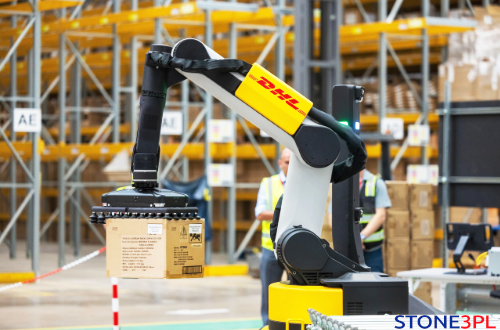
A common misconception in logistics is that warehouse robotics eliminate the need for human labor. In reality, DHL Supply Chain—which has deployed more than 9,000 robots globally alongside millions of robotic case unloads and picks—is scaling both temporary workers and automation simultaneously because peak season creates bifurcated workflows:
- High-Velocity Repetitive Picks (Robotics): Autonomous mobile robots (AMRs) and automated sorting lines excel at moving standard SKUs across long warehouse aisles without fatigue, maintaining consistent throughput during 24/7 holiday shifts.
- Complex Exceptions & Value-Added Prep (Human Workers): When AI-driven flash sales trigger multi-SKU bundles, custom gift packaging, damaged carton exceptions, or strict B2B/FBA compliance labeling, trained warehouse associates are indispensable.
- WMS Orchestration Is the True Bottleneck: Hardware alone cannot fix bad inventory data. If SKU locations are out of sync or orders fail to route dynamically between automated zones and manual packing stations, peak congestion still brings dispatch lines to a halt.
Why the holiday peak is starting earlier
Traditional peak-season planning often concentrated on Black Friday and Cyber Monday. However, promotions are increasingly distributed across October and November.
DHL's latest outlook highlights three important changes:
- Flash sales are starting earlier, extending the period of elevated fulfillment activity.
- Major retailers are concentrating promotions around November 19, ahead of Thanksgiving.
- AI-assisted price comparison is making consumers more promotion-sensitive.
According to the FreightWaves report, approximately 90% of online shoppers are expected to use AI tools to find competitive deals.
For logistics teams, this creates a different demand pattern. Instead of preparing for one enormous sales spike, warehouses must maintain sufficient capacity over a longer promotional period.
This is particularly challenging for smaller international sellers that cannot afford to maintain excess warehouse labor and inventory throughout the entire season.
DHL's Peak Season Strategy: Preparing for Higher Sales and More Complex Fulfillment
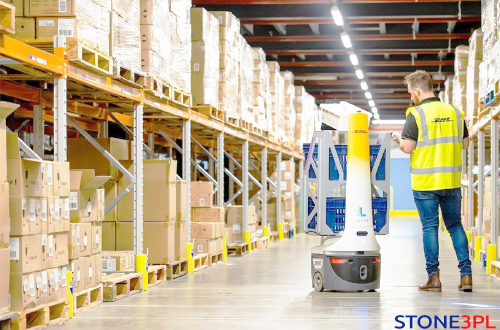
The holiday peak season is one of the most demanding periods for global e-commerce logistics. Black Friday, Cyber Monday, Christmas, and year-end promotions create concentrated order volumes, tighter delivery expectations, and greater pressure on warehouse operations.
To prepare for these challenges, DHL Supply Chain is strengthening its seasonal workforce and expanding warehouse automation.
According to the reference figures provided, DHL plans to:
- Recruit approximately 7,000 temporary workers to support peak-season operations.
- Expand the deployment of warehouse robots to improve operational efficiency.
- Adjust fulfillment capacity to accommodate earlier holiday shopping activity.
- Respond to increasingly price-sensitive consumers who use AI-powered tools to compare prices and promotions.
However, the most important insight is not simply that DHL is hiring more workers or deploying more robots. It is that peak-season logistics demand is becoming increasingly complicated.
Holiday sales are expected to increase by approximately 5%–10%, while actual unit sales growth is projected at only 2%–3%. This difference suggests that higher transaction values do not necessarily translate into proportionally higher shipment volumes.
For logistics providers, this changes how warehouse capacity, labor allocation, inventory positioning, and transportation resources should be planned.
3 Actionable Lessons for Cross-Border & B2B Sellers This Peak Season
While global carriers like DHL reinforce their core hubs with thousands of workers and robots, individual brands still bear the brunt of peak-season surcharges, cut-off deadlines, and inventory misallocation. Here is how to apply DHL Peak Season intelligence to your own supply chain:
1. Plan Warehouse Capacity Around Unit Touches, Not Gross Revenue
Stop tying your fulfillment budget to gross merchandise value (GMV). Audit your SKU velocity to separate Pick-and-Stick items (pre-packaged, single-unit orders) from Pick-and-Pack items (multi-item bundles requiring custom dunnage). Routing pre-packed SKUs through streamlined express lanes cuts fulfillment handling time and labor costs dramatically.
2. Defend Conversions Against AI Price-Comparison Tools
When 90% of consumers use AI to compare landed costs across retailers, inflated international shipping rates or slow 15-day transit times will kill your checkout rate. Positioning inventory closer to end buyers—using distributed regional warehouses across North America (NORAM), Europe (EMEA), and Asia-Pacific (APAC)—allows you to offer fast, localized 2–3 day delivery without paying emergency air-freight premiums.
3. Shift from Fixed Overhead to Elastic 3PL Scalability
Building an internal warehouse capable of absorbing a compressed November 19 promotional surge leaves you paying for idle space and surplus staff ten months of the year. Partnering with a tech-driven third-party logistics (3PL) provider lets you tap into pre-negotiated carrier volume discounts (across DHL, FedEx, UPS, and regional postal networks) and elastic warehouse capacity on demand.
How Third-Party Warehousing and Logistics Providers Can Help Sellers Handle Peak Season
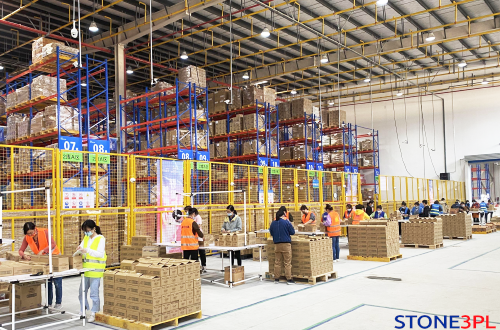
DHL's Peak Season strategy demonstrates how large logistics networks combine labor, automation, and capacity planning. But businesses do not necessarily need to operate their own warehouses or invest in expensive automation to benefit from these operational principles.
Working with a professional third-party logistics provider (3PL) can give growing e-commerce businesses access to warehousing infrastructure, order management, shipping networks, and flexible fulfillment services.
With over 10 years of global logistics expertise and 100+ carrier partnerships, Stone3pl processes 50,000+ daily orders with a 99.94% on-time SLA rate and 99.96% order accuracy.
Frequently Asked Questions About Peak-Season Third-Party Fulfillment
1 What is DHL Peak Season, and why does it matter to e-commerce sellers?
DHL Peak Season refers to periods of increased logistics demand, particularly around major shopping events such as Black Friday, Cyber Monday, and Christmas.
During these periods, warehouse labor, transportation capacity, and delivery networks face additional pressure.
For e-commerce sellers, preparing early helps reduce stockouts, fulfillment delays, and unexpected logistics expenses.
2 Can Stone3PL fulfill Shopify and Amazon orders internationally?
Stone3PL offers e-commerce logistics and integration capabilities for cross-border businesses. Its official service information describes API and plugin integration, order management, and international shipping support.
Businesses should confirm the specific marketplace integration, inventory synchronization requirements, and fulfillment workflow with Stone3PL before onboarding.
3 How does warehouse automation improve peak-season fulfillment?
Warehouse automation can reduce repetitive manual tasks, improve material handling, and help warehouses process more orders with available resources.
Common applications include autonomous mobile robots, automated picking systems, conveyor systems, and warehouse management software.
However, automation works best when integrated with accurate inventory records, trained employees, and effective warehouse workflows.
Recommended authoritative references and further reading
FreightWaves – DHL Preps for Peak: 7,000 Workers & Robotics Growth
DHL Supply Chain – Digitalization Strategy, Adaptive Robotics and AI Orchestration


