
2026 Private Label Product Shipping and Transportation Guide
Your 2026 private label product shipping strategy should prioritize compliant packaging, accurate documentation, and professional 3PL partners like Stone3pl, which manages end-to-end international logistics for B2B brands and e-commerce sellers.
Table of Contents
In 2026, private label product shipping means delivering your branded goods from the factory to global buyers through a controlled, compliant, and data-driven logistics process managed by a professional international logistics provider. For growing brands, using a third-party logistics (3PL) service like Stone3pl allows for centralized management of private label product shipping, warehousing, and inventory, enabling you to focus on product and marketing without the hassle of complex freight processes.
What is Private Label Product Shipping?
Private label product shipping refers to the logistics process of transporting goods manufactured by one company but sold under another company's brand. These private label products are widely used by e-commerce platforms, retailers, and online sellers who want to build their own brand image while outsourcing production.
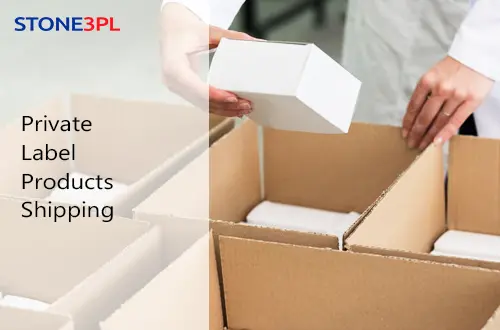
Shipping private label products typically involves the following stages:
Pickup from the manufacturer
Packaging and brand labeling
Warehousing and inventory management
International freight
Customs clearance and tariff processing
Last-mile delivery to the logistics center or customer
Specialized logistics providers like Stone3pl can help businesses manage these processes efficiently and reduce operational risks.
Step-by-Step Guide: Shipping Private Label Products
- Product Packaging and Labeling
When shipping private label products, use robust, durable, brand-specific packaging to withstand handling, stacking, and temperature changes during international shipping.
Add compliant labels (SKU, barcode, batch number, expiry date, country of origin, safety mark) that comply with destination regulations and market rules (e.g., Amazon Logistics, regional standards).
Key considerations include:
Reinforced cartons or protective packaging
Brand-specific packaging design
Barcodes and SKU labels
Protection for fragile items
Compliance with market requirements
Choose appropriate packaging sizes to minimize size and weight costs. Size and weight costs account for a significant portion of carrier pricing in 2026. Stone3pl offers custom-designed boxes and packaging solutions that match your private label brand image while meeting durability standards for international shipping.
- Compliance, Safety, and Certification
Confirm your private label products comply with rules of origin and destination: HS classification, product safety, labeling laws, and specific industry standards (cosmetics, food, supplements, electronics).
To avoid border seizures, prepare all necessary certificates (MSDS, test reports, certificates of origin, FDA-type registration certificates, etc.) before booking.
Companies should verify:
Import regulations of the destination country
Required product certifications
Labeling and safety standards
Restricted or regulated product categories
Correct HS code classification
Ensuring compliance helps prevent customs delays, fines, or cargo seizures.
- Choosing the Right Freight and Transportation Methods
Select the appropriate transportation method based on profit margins and delivery times: sea freight is suitable for bulk commodities and B2B replenishment, air freight is suitable for urgent launches or high-value SKUs, and rail/road freight is suitable for regional distribution.
For shipping private label products, a reliable logistics partner is crucial. Experienced freight forwarders can ensure your products are efficiently transported from the manufacturer to their final destination.
Professional 3PLs like Stone3pl can help you design multi-stage solutions (factory pickup, export hubs, trunk lines, import warehousing, last-mile delivery options) and customize them for each private label product line.
Key factors to consider when choosing a logistics provider include:
International shipping expertise
Customs clearance support
Global operator network
Integrated warehousing solutions
Real-time cargo tracking
Partnering with professional 3PL service providers like Stone3pl allows sellers to consolidate their supply chain management under a trusted supplier.
- Customs, Duties, and Documentation
Customs procedures have a significant impact on shipping time and costs. Accurate documentation is crucial for smooth customs clearance when shipping private label products. Prepare a complete customs documentation package: commercial invoice, packing list, bill of lading or air waybill, and necessary certificates of origin.
Providing accurate product information helps avoid delays and reduces the risk of additional inspections or penalties.
Use accurate product descriptions and HS codes for each private label SKU to prevent misclassification, unexpected tariffs, or clearance delays.
- Warehousing, Logistics, and Last-Mile Delivery
Store private label products in appropriately configured facilities (temperature or humidity control, security, batch/lot number tracking) to maintain quality and traceability.
Stone3pl's cloud-based Warehouse Management System (WMS) integrates with major e-commerce platforms and provides 24/7 inventory visibility. Integrate warehouse management with your e-commerce platform so that orders automatically flow to Stone3pl for picking, packing, and shipping, with real-time order status tracking and final delivery to your stores.
- Customer and Buyer Communication
Proactively provide B2B buyers and retail consumers with updates on order status, tracking, anomalies, and estimated arrival times to reduce support tickets and refunds.
Even when Stone3pl handles the logistics backend, use branded notifications and tracking pages to keep private label products at the center.
Advantages and Risks of Private Label Product Shipping
Advantages:
Brand Control
Private label products allow companies to control their brand image, packaging, and marketing strategies, leading to stronger customer loyalty.
Product Exclusivity
Retailers can sell unique products that are difficult for competitors to replicate.
Higher Profit Margins
Due to the uniqueness of private label products, companies can typically price them higher, thus maintaining higher profit margins.
Potential Challenges:
Upfront Investment
Developing private label products requires investment in manufacturing, packaging design, and brand promotion.
Quality Control
Maintaining consistent product quality requires rigorous monitoring of manufacturers and suppliers.
Inventory Risk
Companies may face inventory backlogs if demand forecasts are inaccurate.
Partnering with experienced international third-party logistics companies can mitigate many risks by standardizing the shipping process for private label products and optimizing total cost of goods sold.
Key Considerations for Private Label Product Shipping in 2026
Customized and Protective Packaging
When designing packaging, businesses should reflect their brand image while ensuring effective protection of products during transport. Treat packaging as a brand asset and cost lever: choose appropriate carton sizes to reduce volumetric weight while protecting fragile or regulated private label products.
Depending on the product category, the following requirements may also need to be met:
Temperature-Controlled Packaging
Shock Resistance
Moisture-Proof Materials
Stone3pl can design and manufacture customized boxes and liners that conform to your private label identity, while optimizing shipping efficiency and compliance.
Legal and Regulatory Requirements
For categories such as health supplements, cosmetics, food, or electronics, please verify all registration information, ingredient disclosures, and warning labels before international shipping. Stone3pl's compliance team can help you verify documents and coordinate with customs brokers in key markets.
Warehouse and Logistics Design
Utilize regional warehouses near key markets (e.g., the US, EU, Asia) to reduce shipping time and cross-border friction for your private label products.
Stone3pl offers multi-node warehousing services, allowing you to distribute your inventory closer to key demand centers while maintaining centralized visibility.
Inventory Management and Forecasting
Implement real-time inventory tracking for each private label SKU (by batch, expiry date, and location) to avoid stockouts and slow-moving inventory. Stone3pl provides integrated inventory dashboards and alerts that connect to common e-commerce platforms and ERP systems.
Channel-Specific Routing (FBA, DTC, B2B)
For Amazon FBA and similar programs, adhere to market-specific carton labeling, pallet standards, and ASN requirements when shipping private label products. Stone3pl can create channel-specific workflows so that the same inventory pool can serve Amazon FBA replenishment, wholesale orders, and direct-to-consumer shipments.
Why Choose Stone3pl as Your Private Label Logistics Provider?
Stone3pl is a professional third-party international logistics provider specializing in private label products, B2B freight forwarding, and global e-commerce logistics. We integrate freight forwarding, customs management, warehousing, and last-mile delivery into a comprehensive service platform tailored specifically for private label shipping.
Key advantages of partnering with Stone3pl:
Stone3pl provides end-to-end private label logistics services, managing factory pickup, export, international shipping, customs, regional warehousing, and final delivery, reducing your need to coordinate multiple suppliers.
Infrastructure with private label manufacturing capabilities: Our facilities support custom packaging, kit assembly, relabeling, and light value-added services, ideal for shipping private label products to retail and online channels.
Global compliance and customs support: We partner with established customs brokers and employ structured document workflows to reduce customs clearance risks and tariff uncertainties for private label shipments.
Stone3pl leverages technology-driven visibility, integrating with major marketplaces and shopping carts to provide end-to-end tracking, inventory insights, and performance analytics for your private label products. By consolidating freight volumes from diverse clients and routes, we negotiate competitive shipping rates and design combinations of transportation methods to optimize international shipping costs and safeguard the profitability of your private label products.
For brands looking to expand their private label product shipping by 2026, Stone3pl acts as a strategic logistics partner, not just a carrier or warehouse.
Frequently Asked Questions
What is a Private Label?
Private label products are manufactured by one company but sold under another company's brand name. Retailers or e-commerce businesses outsource production while customizing the branding, packaging, and marketing.
What types of private labels are there?
Private Label Products – Goods manufactured and sold under a retailer's brand.
Private Labels – Exclusive products sold exclusively by that retailer.
Private Label Lines – Sub-brands under a retailer's umbrella.
Niche Market Brands – Products tailored to a specific audience.
What is the difference between private labels and white labels?
Private label: Products are developed and branded specifically for a single brand or retailer, typically featuring unique formulas, packaging, or functions unavailable to other brands.
White label: Generic products manufactured by a manufacturer that can be purchased and rebranded by multiple brands with minimal or no modifications.
Due to the greater customization and uniqueness of private label products, they often require more stringent quality control, more specific packaging, and more tailored international logistics arrangements—where Stone3pl's private label shipping solutions offer significant value.
Private label businesses continue to experience rapid growth in global e-commerce, but efficient logistics is key to their success. From packaging and compliance to warehousing and international shipping, every aspect of private label product shipping must be carefully managed.
By partnering with specialized logistics providers like Stone3pl, businesses can streamline their supply chains, reduce operational risks, and deliver products to customers worldwide more efficiently.


